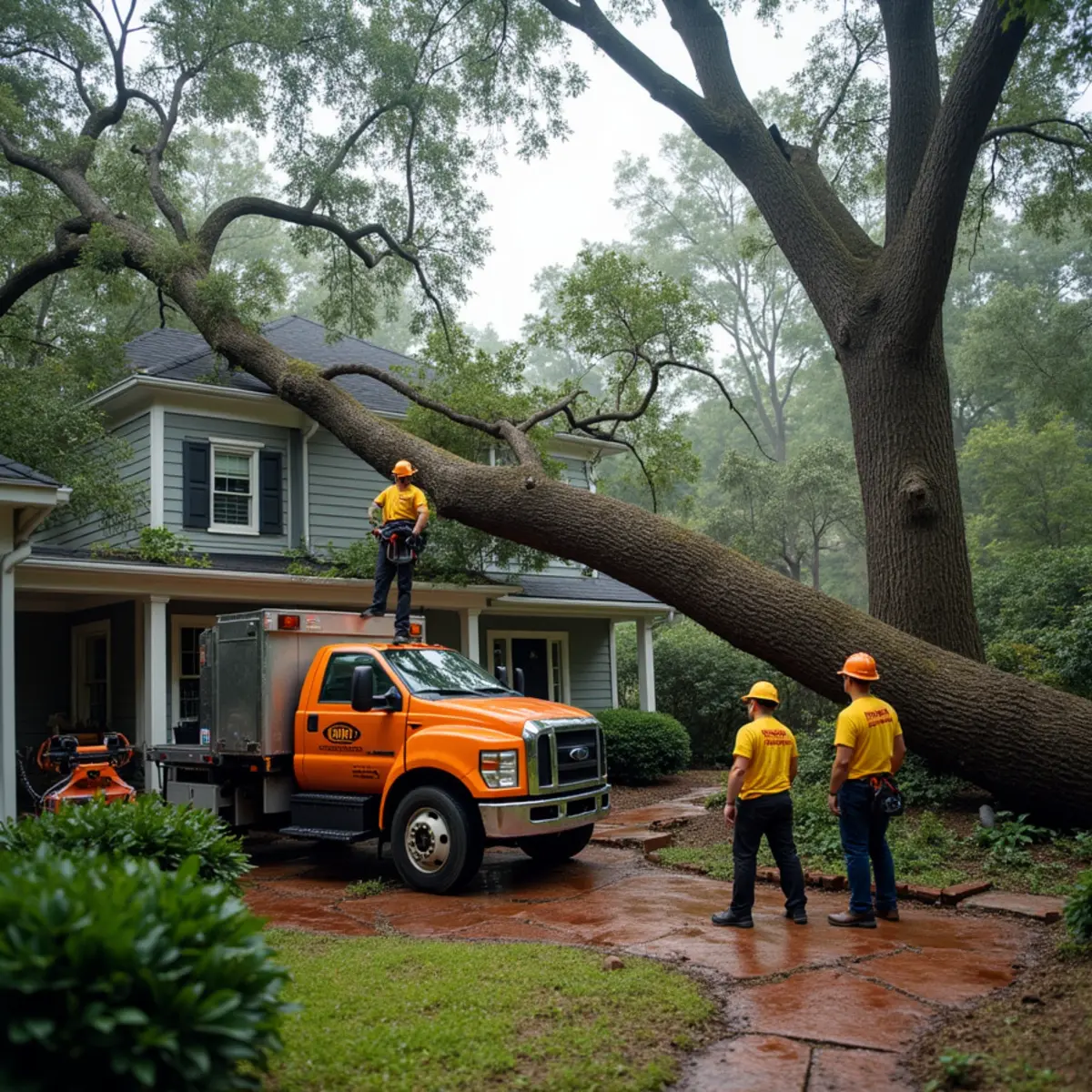
There are few sounds a Charlotte homeowner dreads more than the deep crack and shudder of a mature tree hitting the roof. When a willow oak that has stood in the yard for eighty years finally comes down in a Piedmont thunderstorm, the first minutes matter enormously. What you do in that window protects your family, limits further damage, and sets up a clean insurance claim.
This guide walks through the exact order of operations we recommend to Charlotte and Mecklenburg County residents, drawn from years of pulling oaks off roofs in Myers Park, Plaza Midwood, and the far corners of the county. The goal is simple: keep everyone safe first, stabilize the situation second, and document everything third.
Nothing here is a substitute for calling professionals. A tree resting on a structure is under loads and tensions that are invisible from the ground, and cutting the wrong limb can bring the rest of it down. But knowing the sequence keeps you calm when the pressure is highest.
Key Takeaways
- Evacuate the impacted rooms first and treat every downed line as live, calling Duke Energy and 911 before anyone goes near wires.
- Photograph and video all damage from multiple angles before any cleanup, and tie it to the storm date to strengthen your insurance claim.
- Tarp only from a stable, reachable spot and never climb a compromised roof; keep receipts for tarps and lodging as mitigation costs.
- Removing a tree from a structure is a rigging job needing cranes or grapple trucks, not a chainsaw, so leave extraction to insured pros.
Get everyone out and account for people first
Before anything else, move every person and pet out of the affected part of the house and into a safe area away from the impact zone. A tree that has punched through a roof can continue to settle for minutes or hours as gravity, wet clay, and shifting weight redistribute the load. Ceilings may sag and give way without warning.
If anyone is injured, or if you smell gas, call 911 immediately. In the Charlotte metro, Mecklenburg EMS and the fire department will respond and can shut off utilities and check structural safety far faster than you can.
- Evacuate the impacted rooms and the floor directly below them
- Do not go into the attic or onto the roof to assess damage
- Keep children and pets in a room on the opposite side of the house
- If you smell gas or hear hissing, leave the home entirely and call 911
Assume every downed line is live and call Duke Energy
This is the single most important safety rule after a tree failure. If the tree pulled down a power line, or if a line is draped across the trunk, treat it as energized and lethal. Never approach a downed line, never touch the tree it is touching, and never assume a dark neighborhood means the line is dead. Backfeed from generators and reclosing equipment can re-energize a line at any moment.
Call Duke Energy to report the downed line and request that the power be cut and the line made safe. No tree company, including ours, will begin work near an energized conductor until Duke Energy has de-energized and cleared it. This is not caution for its own sake; it is the difference between a repaired roof and a fatality.
Shut off utilities only if you can do it safely
If the impact zone is away from any downed lines and you can reach your electrical panel without walking under the damaged structure, shutting off power to the affected circuits reduces fire risk from severed wiring. The same logic applies to water if the tree ruptured a supply line in the wall or ceiling.
If reaching the panel means passing under a sagging ceiling or a tree that could still shift, leave it. Utility shutoff is helpful, not worth an injury. Let the fire department handle it when they arrive.
Document everything before anything is moved
Insurance adjusters build their decisions on evidence. Before any cleanup begins, photograph and video the scene from multiple angles: the tree on the structure, the interior damage, water intrusion, and any damaged vehicles or fencing. Capture wide shots that show context and close-ups that show detail.
Note the date, time, and weather. In Charlotte, most tree-on-house claims trace back to a specific storm event, and tying the damage to that event strengthens the claim. Save these files in more than one place before you start pulling tarps and branches.
- Wide and close photos of the tree, roof, and every damaged room
- Video narration describing what happened and when
- Photos of any water coming through ceilings or walls
- Serial numbers or photos of damaged electronics and furniture
Prevent further damage without overreaching
Most North Carolina homeowners policies require you to take reasonable steps to prevent additional damage once the initial event is over. In practice that usually means tarping an exposed roof section to keep rain out, since a Piedmont afternoon can turn from clear to a downpour in an hour.
Do this only where it is safe and reachable from a stable position. Do not climb onto a compromised roof. If the safe move is to place buckets under the leak and wait for a professional tarp, that is the right call. Keep receipts for tarps, plywood, and any emergency lodging, because those mitigation costs are frequently reimbursable.
Call a professional tree service for extraction
Removing a tree from a house is a specialized rigging job, not a chainsaw job. The trunk and limbs are storing energy, and cutting in the wrong sequence can spring a limb, drop the load onto occupants, or collapse more of the roof. Professionals use cranes, grapple trucks, and controlled rigging to lift sections off the structure rather than letting them fall.
Our emergency crews serve Charlotte and all of Mecklenburg County around the clock. We coordinate with Duke Energy on any line issues, extract the tree in controlled pieces, and haul the debris out with grapple trucks so your yard is not left buried. For planning purposes, emergency tree work in this market commonly ranges from about $400 to $9,000 depending on size, access, and structural entanglement; that is a planning range, not a quote, and every situation gets its own on-site assessment.
Work with your insurer and keep a paper trail
Contact your insurance carrier as soon as the scene is safe. Report the loss, ask about your deductible and coverage limits for debris removal, and get a claim number in writing. Keep a running log of every conversation, including names and dates.
A reputable tree company will provide an itemized invoice that adjusters recognize, and we routinely document our work with photos so your claim moves smoothly. Coverage details vary, so confirm specifics with your own agent rather than assuming any figure here applies to your policy.
Common mistakes to avoid in the first hour
In the shock right after a tree hits the house, well-meaning reactions often make things worse. The most common one is trying to help by cutting a limb or dragging debris off the roof, but the tree is under hidden tension, and one wrong cut can spring wood or drop more of the canopy into the room below. Another is walking back through damaged rooms to rescue valuables while the ceiling is still sagging overhead.
Storms also draw out-of-town door-knockers who pressure homeowners into signing broad contracts or assignment-of-benefits paperwork on the spot. Slow down. Make the scene safe, document it, and choose an insured local crew whose coverage and reputation you can verify.
- Do not cut, drag, or otherwise try to move the tree off the structure yourself
- Do not re-enter rooms under a sagging or loaded ceiling
- Do not discard any debris before your adjuster has documented it
- Do not sign broad contracts with storm-chasing door-knockers under pressure
- Do verify a company's insurance and local track record before work begins
Need help from a Charlotte tree crew?
Free estimates, licensed & insured, 24/7 emergency response.
Related Services & Areas
Frequently Asked Questions
No. A tree resting on a structure is under hidden tension, and an incorrect cut can drop the load onto people or collapse more of the roof. Extraction requires rigging, and often a crane. It is one of the most dangerous jobs in tree work and should always go to insured professionals.
Safety first: get everyone out, and if a power line is involved call Duke Energy and 911 as needed. Then call a tree service to make the structure safe and stop further damage, and notify your insurer once the scene is secure. Emergency mitigation should not wait on a claim number.
In most cases a tree that strikes a covered structure during a storm is covered, including reasonable debris removal, subject to your deductible and limits. Coverage varies by policy and cause, so confirm with your agent. Keep all photos and receipts to support the claim.
We run 24/7 emergency crews across Charlotte and Mecklenburg County and prioritize trees on homes with people inside. Call (855) 615-0568 and we will dispatch as quickly as conditions and Duke Energy line clearance allow.

Written & reviewed by
CLT Grapple and Stump Grinding Services
Locally owned and operated in Charlotte since 2018, our crews handle tree removal, grapple hauling, and stump grinding to ANSI A300 pruning and Z133 safety practices. Licensed & insured, 8+ years serving Mecklenburg County and North Carolina. Questions about your property? Call (855) 615-0568 or learn more about us.