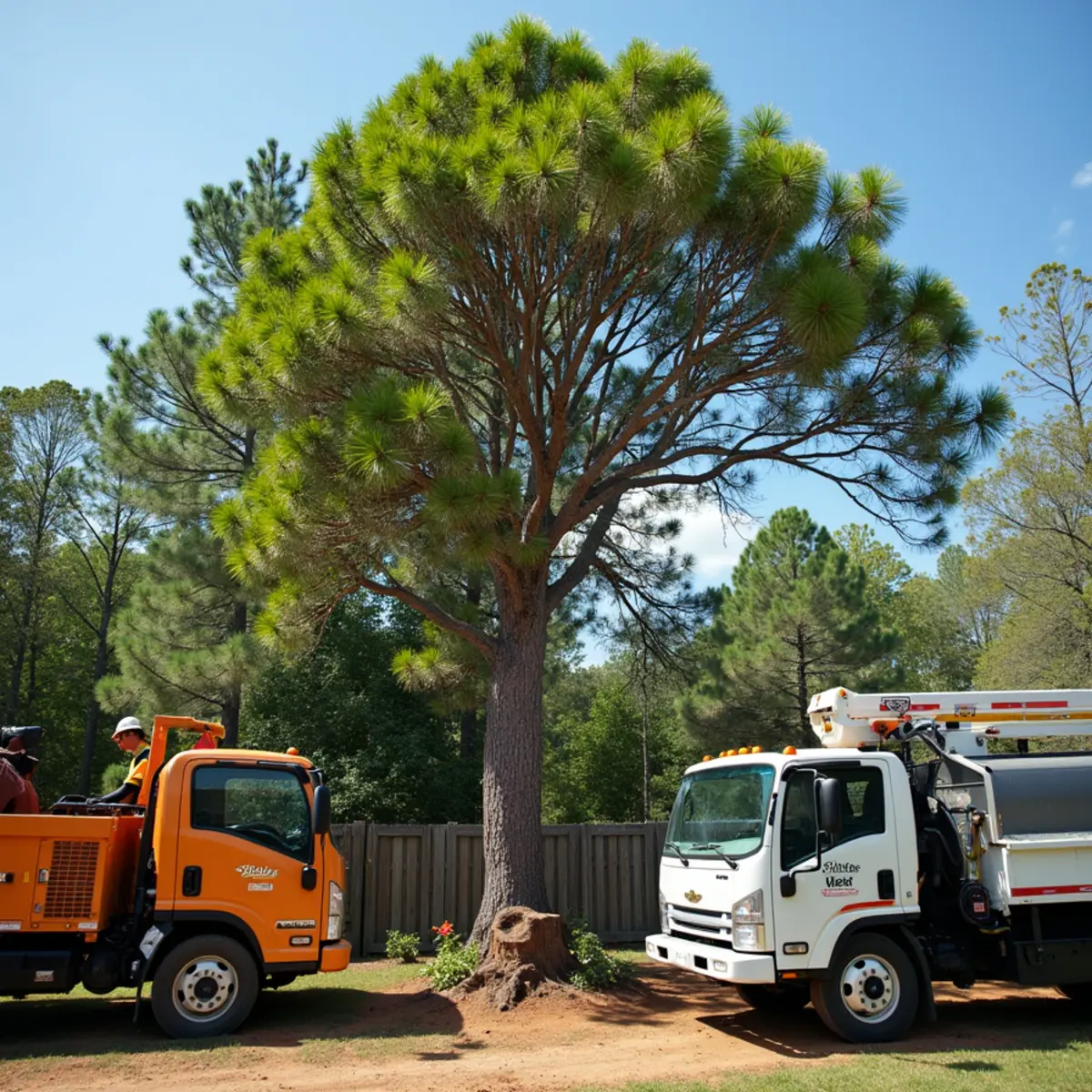
Drive through almost any North Carolina neighborhood and you will see them: trees cut back to thick, ugly stubs, or trees stripped of all their interior foliage with a tuft left only at the ends of the limbs. These are the results of topping and lion-tailing, two of the most damaging things anyone can do to a tree, and both are unfortunately common.
The people who request or perform this work usually believe they are making the tree safer or smaller. In reality, they are setting the tree up to become more hazardous, less healthy, and far more expensive to deal with down the road. Topping in particular is condemned by every professional arboriculture standard, yet it persists because it looks like decisive action.
Here is why topping and lion-tailing are so harmful, what they do to a tree over time, and what proper pruning looks like instead, for tree owners in Hickory, Charlotte, and across the state.
Key Takeaways
- Topping cuts limbs back to stubs with no regard for structure, and the size reduction is temporary because the tree rushes out fast-growing water sprouts.
- Those water sprouts are weakly attached and break easily in wind and ice, so a topped tree grows more hazardous over time, not less.
- Large stub wounds cannot seal at the branch collar, opening the tree to decay, while heavy leaf loss starves it and invites insects and disease.
- Lion-tailing strips interior foliage and loads weight at the limb tips; both practices weaken the tree while appearing to tidy it, and good arborists refuse them.
What topping actually is
Topping is the indiscriminate cutting of large branches, or the whole crown, back to stubs, with no regard for the tree's natural structure or proper cut points. Instead of removing a limb back to a suitable lateral branch or the trunk, topping simply lops the top off, leaving big, open stubs.
It is often sold as a way to reduce a tree's size or make it safer, especially with tall trees near houses. But it does neither. A topped tree does not stay small, and it does not become safer; it becomes a maintenance and hazard problem that gets worse every year.
Why topping backfires
Topping triggers a survival response. The tree, suddenly stripped of the foliage it needs to feed itself, rushes out a dense flush of fast-growing shoots called water sprouts just below the cuts. These sprouts grow quickly, restoring height within a few years, so the size reduction is temporary at best.
Worse, these water sprouts are weakly attached. They grow from near the surface of the old wood rather than from a strong, integrated union, so they are far more likely to break off in wind and ice than the original limbs were. The tree ends up taller, denser, and more prone to shedding limbs, the opposite of the intended effect.
- Regrowth is fast, so the tree soon returns to its former height
- Water sprouts are weakly attached and break easily in storms
- Large stub wounds cannot seal and invite decay fungi
- The tree becomes more hazardous, not less, over time
The decay and starvation problem
The big stub cuts that topping creates are wounds the tree cannot properly close. A correct pruning cut, made at the branch collar, allows the tree to seal over the wound. A topping stub, cut in the middle of a large limb, is too big to seal and becomes an open door for decay fungi, which rot back into the trunk and the new sprouts, undermining the tree's structure.
Topping also starves the tree. Removing most of its leaves in one cut destroys much of its food-producing capacity, stressing the tree, depleting its reserves, and making it more vulnerable to insects and disease. A topped tree is a stressed, decaying tree carrying weak new growth, a bad outcome on every count.
Lion-tailing: the opposite mistake, same damage
Lion-tailing is the practice of stripping out all the interior branches and foliage along a limb, leaving growth only at the far end, so the limb resembles a lion's tail. It is sometimes done in a misguided attempt to thin a tree or reduce wind resistance, but it does real harm.
By removing the interior foliage that helps taper and strengthen a limb, lion-tailing concentrates all the weight at the branch tips on a bare, whip-like limb. This makes limbs more likely to break, exposes previously shaded bark to sunscald, and promotes the same weak, sprouty regrowth. Like topping, it weakens the tree while appearing to tidy it.
What proper pruning looks like
Good pruning respects the tree's biology. When a tree genuinely needs to be smaller, the correct technique is crown reduction, selectively shortening limbs back to sound lateral branches large enough to assume the terminal role, so the cuts are smaller, can seal, and the tree keeps a natural form. Deadwood is removed, weak unions are addressed, and the canopy is thinned lightly and evenly, never stripped.
Done right, pruning reduces risk, improves structure, and keeps the tree healthy, exactly what topping claims to do but never delivers. It requires knowing where and how to cut, which is why it should be done by trained personnel following professional standards rather than by anyone with a saw and a ladder.
Choose the right care for your trees
If a company recommends topping your tree, that is a signal to find another company. Reputable arborists do not top trees, because the practice violates the professional standards the industry is built on. Insist on proper crown reduction and pruning that will keep your tree safe and healthy for the long term.
We prune and reduce trees the right way across Hickory, Charlotte, and the surrounding region, never topping and never lion-tailing. Call (855) 615-0568 for pruning that protects your trees instead of ruining them.
Can an already-topped tree be fixed?
If a previous owner or a bad crew already topped your tree, the damage cannot be undone, but a skilled arborist can often guide it back toward a safer structure over several years through restoration pruning. The work selects the strongest of the many water sprouts to become new leaders, gradually removes the weakest, and subordinates the rest, so the tree slowly rebuilds a more natural, better-attached crown.
This is patient, staged work, not a single cut, and it will not erase the internal decay that the original stub wounds let in. In some cases, where the topping caused extensive decay or the regrowth is hopelessly weak over a target, removal and replanting is the more honest answer. An assessment determines which path the individual tree can actually support.
Need help from a Charlotte tree crew?
Free estimates, licensed & insured, 24/7 emergency response.
Related Services & Areas
Frequently Asked Questions
The size reduction is temporary. Topping triggers fast-growing water sprouts that restore height within a few years, and those sprouts are weakly attached and break easily. It also creates large wounds that invite decay and starves the tree. The result is a more hazardous, unhealthy tree.
Lion-tailing strips all the interior foliage from a limb, leaving growth only at the tip. It concentrates weight at the ends of bare, whip-like limbs, making them more likely to break, and exposes shaded bark to sunscald. Like topping, it weakens the tree while appearing to tidy it.
By crown reduction: selectively shortening limbs back to sound lateral branches large enough to take over, so cuts stay small and can seal and the tree keeps a natural form. Combined with deadwood removal and light, even thinning, this reduces risk without the damage topping causes.
Consider it a red flag and get another opinion. Reputable arborists do not top trees, because topping violates professional arboriculture standards. Insist on proper crown reduction and pruning instead, which keeps your tree safe and healthy for the long term.
Written & reviewed by
CLT Grapple and Stump Grinding Services
Locally owned and operated in Charlotte since 2018, our crews handle tree removal, grapple hauling, and stump grinding to ANSI A300 pruning and Z133 safety practices. Licensed & insured, 8+ years serving Mecklenburg County and North Carolina. Questions about your property? Call (855) 615-0568 or learn more about us.