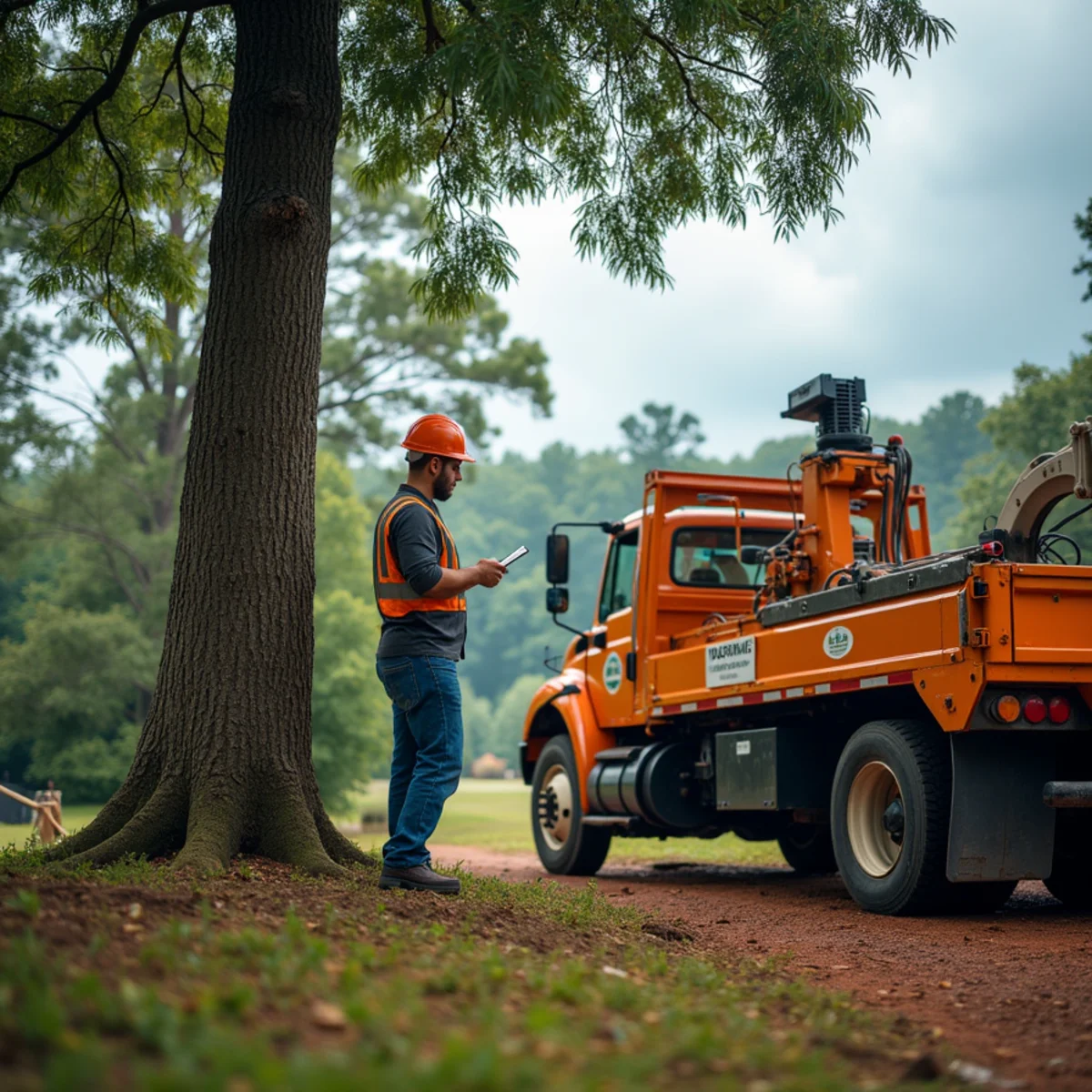
Charlotte is a long way from the coast, but hurricanes still reach the Piedmont. The remnants of coastal storms, Hugo in 1989 remains the benchmark, along with Florence and the devastating Helene in 2024, arrive inland as powerful wind and rain events that topple trees far from any beach. When the ground is saturated and the wind is sustained, Charlotte's mature canopy becomes a liability.
The good news is that most storm tree damage is predictable and preventable. The trees that fail are usually the ones that were already compromised, dead, decayed, leaning, or structurally weak, and a pre-season audit finds them while the weather is calm. An hour of inspection in the spring can prevent a tree through your roof in the fall.
Here is a practical, walk-your-property checklist for auditing your trees before hurricane season peaks in late summer and early fall.
Key Takeaways
- Hurricane remnants reach the Piedmont as major wind-and-rain events; Hugo, Florence, and Helene all toppled trees far inland when the soil was saturated.
- Most storm tree damage is preventable, since failures cluster on already-compromised trees that a calm-weather audit can find before the wind does.
- Prolonged rain saturates red clay and loosens root grip, so trees often fall late in a storm or after it; shallow-rooted oaks and pines are highest risk.
- Do preventive work in spring and early summer, because reputable crews book up fast once a storm is forecast and rushed emergency work costs more.
Start with a walk-around of every large tree
Begin by simply looking at each significant tree on your property, ideally from several angles and with binoculars for the upper canopy. You are looking for the trees most likely to fail under wind and saturated-soil conditions, and most large-tree failures announce themselves if you know what to look for.
Pay special attention to trees within striking distance of the house, driveway, cars, and the power line. A perfectly healthy tree in the back corner of the lot is a low priority; a compromised tree leaning over the bedroom is the whole point of the audit.
The canopy and limb checklist
Look up into the crown for the signs of weak or dead wood that wind will exploit. Deadwood and poorly attached limbs are the first things to go in a storm, and they are also the easiest to remove preventively.
- Dead branches with no leaves, especially large ones over targets
- Cracked or split limbs, or limbs hanging from a previous storm
- Tight, V-shaped unions with included bark that can split
- Dense, unbalanced canopy that catches wind like a sail
- Limbs rubbing the roof or resting on the power line
The trunk and root checklist
The trunk and roots tell you whether the whole tree could come down, which is far worse than losing a limb. Whole-tree failures in saturated Piedmont clay are what cause the catastrophic roof strikes, so these signs matter most.
- A new or worsening lean, or soil heaving at the base
- Mushrooms or shelf-like fungal conks on the trunk or roots
- Cavities, cracks, or soft, crumbling wood in the trunk
- Exposed or lifting roots, or roots cut by recent construction
- Sawdust-like frass indicating boring insects
Understand the saturated-soil factor
Hurricanes deliver two hazards at once: sustained wind and heavy, prolonged rain. The rain matters as much as the wind, because it saturates the red clay and loosens the grip on tree roots, so wind that a tree could shrug off in dry conditions instead tips it over. This is why so many trees fall late in a storm or in its aftermath, once the ground is soaked.
That combination means even apparently healthy large trees in wet, low spots deserve consideration. The audit is not only about obviously sick trees; it is about identifying which trees, in which soil conditions, are most exposed to the specific one-two punch a hurricane delivers.
Charlotte's shallow-rooted species magnify the effect. Large willow oaks and water oaks, along with tall pines, tend to grow broad, plate-like root systems in the region's dense clay rather than deep anchoring roots, so once the ground is saturated they have little to hold them against a sustained wind. Knowing which of your big trees fall into that category tells you where to focus the audit and, if needed, the preventive work.
Act on what you find, before the forecast
The point of the audit is to fix the problems while the weather is calm. Preventive work, removing deadwood, reducing overextended limbs, and taking down truly hazardous trees, is far cheaper, safer, and less rushed than emergency work during or after a storm, when every tree crew in the region is slammed and prices reflect the demand.
Prioritize by risk: the compromised tree over the house comes first, the healthy tree in the open can wait. A professional assessment turns your walk-around observations into a clear plan, distinguishing the trees that need action now from the ones to simply monitor.
Keep a simple record of what you found and when, with a few photos of any suspect trees. That baseline lets you notice changes year over year, a lean that has worsened, a cavity that has grown, and it gives whoever does the work a head start. The best-prepared Charlotte homeowners treat the tree audit as an annual ritual, tied to spring yard cleanup, rather than a one-time scramble.
Do not wait for the cone to point at Charlotte
The worst time to think about your trees is when a storm is already in the forecast, because reputable crews book up fast and preventive work cannot be rushed safely. The right time is now, in the spring and early summer, well before the late-season peak.
We perform pre-storm tree audits and preventive work across Charlotte and Mecklenburg County, and we stand by for emergency response when storms do hit. Call (855) 615-0568 to schedule an assessment before hurricane season peaks.
Last-minute steps in the 48 hours before a storm
When a storm is already bearing down, the window for cutting has closed. Do not attempt rushed pruning of large trees as the wind builds, which is exactly how people get hurt. Focus instead on lower-risk preparation. Bring in or secure anything the wind could turn into a projectile, clear gutters and storm drains so the rain has somewhere to go, and move vehicles out from under large trees and away from the power line.
Know where your utility shutoffs are, and find the number to report a downed line to Duke Energy before you need it. If you already flagged a hazardous tree in your audit and simply ran out of time, park cars clear of it and keep people on the opposite side of the house from its fall zone until a crew can address it after the storm.
Need help from a Charlotte tree crew?
Free estimates, licensed & insured, 24/7 emergency response.
Related Services & Areas
Frequently Asked Questions
Yes. Hurricane remnants reach the Piedmont as powerful wind and rain events. Hugo in 1989 caused severe inland damage, and storms like Florence and Helene brought destruction far from the coast. Saturated clay plus sustained wind topples Charlotte trees regularly.
Dead or decayed wood, cracked or poorly attached limbs, a lean or lifting root plate, internal cavities, and saturated soil around the roots. Trees near the house, driveway, or power line with any of these signs are the priorities. Healthy trees in the open are far lower risk.
Prolonged hurricane rain saturates Piedmont red clay and loosens its grip on tree roots, so wind that a tree could withstand in dry conditions instead tips it over. Many trees fail late in a storm or afterward, once the ground is soaked, which is why soil conditions are part of the audit.
In spring and early summer, well before the late-season peak. Preventive work is cheaper, safer, and less rushed than emergency work, and reputable crews book up fast once a storm is in the forecast. Do not wait for the cone to point at Charlotte.

Written & reviewed by
CLT Grapple and Stump Grinding Services
Locally owned and operated in Charlotte since 2018, our crews handle tree removal, grapple hauling, and stump grinding to ANSI A300 pruning and Z133 safety practices. Licensed & insured, 8+ years serving Mecklenburg County and North Carolina. Questions about your property? Call (855) 615-0568 or learn more about us.