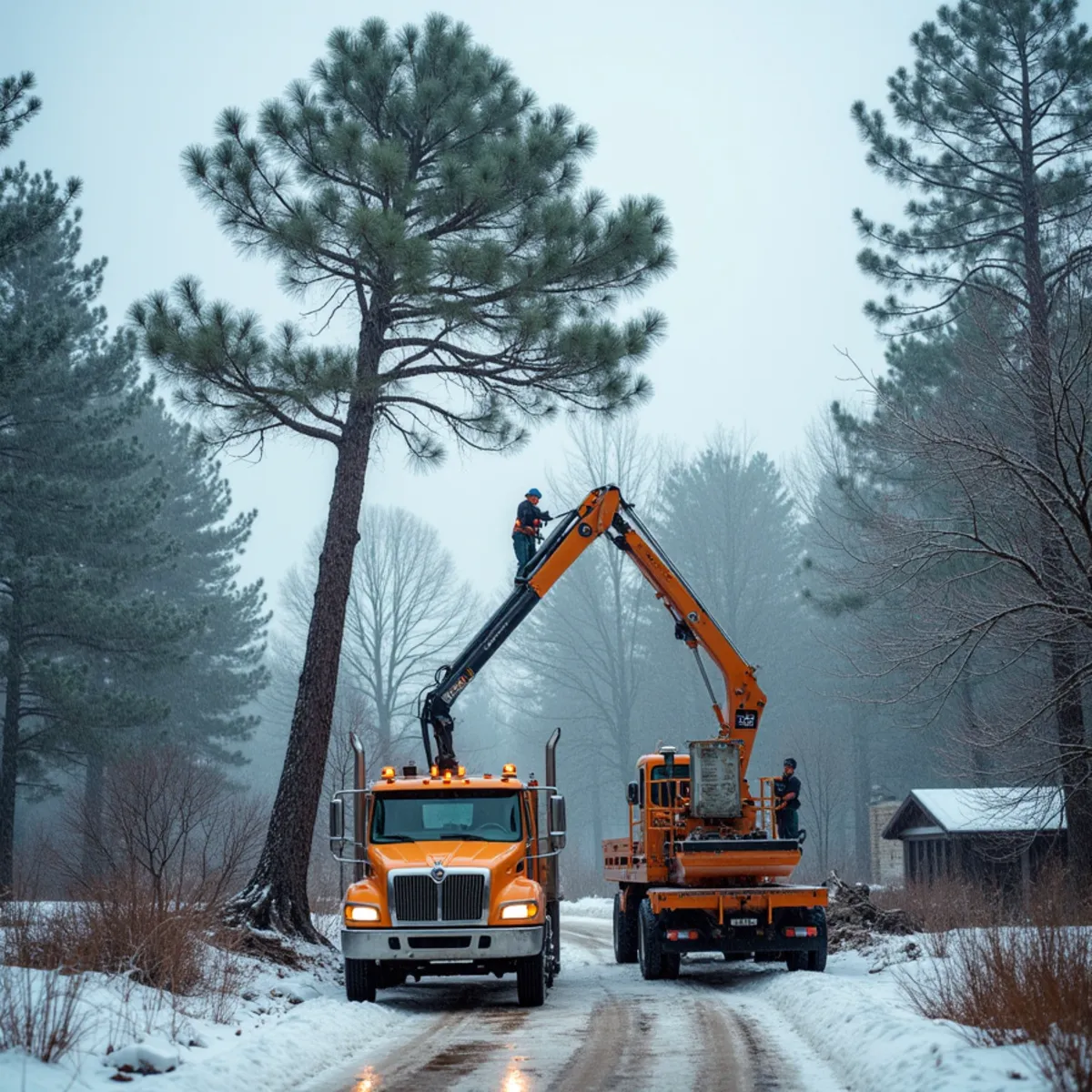
Ice storms are the Piedmont's most underrated tree hazard. Charlotte and the surrounding region sit in a zone where winter precipitation often arrives as freezing rain rather than snow, coating everything in a heavy glaze of ice. When that happens, pines are usually the first trees to fail, and they fail spectacularly, snapping trunks and shedding tops onto roofs and power lines.
Longtime North Carolina residents remember the ice events that left neighborhoods dark for days, with the crack of breaking pines echoing through the cold. Understanding why pines are so vulnerable to ice, and what you can do before the forecast turns, is the key to getting through the season without a tree through your roof.
Here is the physics of ice failure, the reasons pines suffer most, and the practical steps to reduce your risk around Mooresville, Lake Norman, and greater Charlotte.
Key Takeaways
- Piedmont winters often bring freezing rain, not snow, coating every needle and branch in a heavy ice shell that loads pines far beyond summer wind.
- Pines keep their needles year-round and grow tall and top-heavy, so they snap trunks or lose tops under ice while bare, flexible hardwoods bend.
- Because pines fail from the top and the falling top travels, map which pines could reach your roof, driveway, or Duke Energy service drop.
- Address dead, leaning, and top-heavy pines in fall before freezing-rain season; after a storm, treat downed lines as live and leave hung-up tops to pros.
Why freezing rain is worse than snow here
The Piedmont's winter weather frequently produces freezing rain, where rain falls through a shallow layer of below-freezing air near the ground and freezes on contact. Unlike fluffy snow, which mostly falls off, ice bonds to every branch and needle and accumulates in a solid, heavy shell.
Even a modest accretion of ice adds enormous weight, because it coats the entire surface area of a tree. A pine's dense clusters of needles catch and hold ice across a huge area, loading the limbs and trunk with far more weight than they ever carry in summer wind. That is the trap the region's climate sets.
Why pines snap while hardwoods bend
Pines and hardwoods fail differently under ice. Bare, dormant hardwoods have shed their leaves, so they present less surface for ice to grab, and their flexible branch structure lets them bend and shed some load. Pines keep all their needles year-round, catching ice everywhere, and their tall, straight, often top-heavy form concentrates stress.
The result is the characteristic ice-storm failure of pines: the trunk snaps partway up, or the whole top breaks off and falls. Loblolly pines in particular grow tall and slender with much of their foliage high up, which is exactly the geometry that fails under a heavy ice load. Where hardwoods lose a limb, pines lose their tops or their trunks.
- Evergreen needles catch ice across the whole canopy
- Tall, top-heavy form concentrates stress on the trunk
- Brittle behavior under load leads to snapping, not bending
- Loblolly pines' high, dense crowns are especially prone to failure
The specific danger to roofs and power lines
A snapped pine top is heavy, comes down fast, and falls more or less straight, which makes pines near structures and lines a serious hazard. A tall loblolly leaning toward the house, or a row of pines along the Duke Energy service drop, is precisely the situation that produces roof punctures and days-long outages in an ice event.
Because pines fail from the top, the danger zone is larger than people expect. A pine does not need to be right against the house to reach it; the falling top can travel a good distance. Mapping which of your pines could reach a roof, driveway, or line is the first step in reducing risk.
What to do before winter
The time to address pine hazards is before the ice arrives, when work can be done calmly and safely rather than in an emergency. A pre-winter assessment identifies pines that are dead, leaning, crowded, or already weakened, and that pose the greatest failure risk over a target.
- Remove dead and severely leaning pines near structures and lines
- Have crowded, storm-weakened, or top-heavy pines evaluated
- Clear pines directly threatening the roof or the Duke Energy service drop
- Do this in fall, before freezing-rain season, not during a storm
What to do during and after an ice storm
During an ice event, stay inside and away from windows on the side where pines could fall. Never go out to inspect trees while ice is still loading them, because that is exactly when tops break without warning. If a tree brings down a power line, treat the line as live and call Duke Energy; never approach it.
After the storm, ice-damaged pines are extremely dangerous to deal with, because broken tops can be hung up under tension, ready to release when disturbed. Cleanup of snapped and hanging pines is professional work, not a job for a homeowner with a chainsaw.
Be patient, too, as the ice melts. A pine bent nearly to the ground under a heavy glaze may spring back partway as the ice sheds, and a top that looks stable while frozen can shift as the load lifts. Give the trees time to release their ice before anyone approaches, and let a crew evaluate which bent or partially snapped pines will recover and which must come down.
Reducing your risk with a professional
A tree service can assess which pines threaten your home before winter and remove or reduce the worst offenders, dramatically lowering your ice-storm risk. After an event, we clear snapped and hanging pines safely, coordinating with Duke Energy on any line involvement, and haul the heavy debris with grapple trucks.
We serve Mooresville, the Lake Norman communities, and greater Charlotte. Call (855) 615-0568 for a pre-winter pine assessment or for storm cleanup once the ice has done its damage.
Which ice-damaged pines can be saved and which can't
Not every pine that took ice damage has to come down, and rushing to remove them all is as much a mistake as ignoring them. The deciding factors are how much of the crown was lost and whether the main stem is intact. A pine that shed a few small branches but kept its central leader and most of its canopy will often recover over a couple of seasons.
The trees to remove are those with a snapped or split main trunk, the loss of more than roughly half the crown, or a top hung up under tension waiting to release. A bent pine is a genuine wait-and-see case: give it time to shed its ice and stand back up before judging it. When the damage is to the trunk itself, recovery is unlikely and removal is the safe call.
- Likely to recover: intact main stem, minor branch loss, most canopy remaining
- Remove: a snapped or split trunk, or more than about half the crown gone
- Immediate hazard: tops or limbs hung up under tension over a target
- Wait and see: a bent pine still loaded with ice, until it releases
Need help from a Charlotte tree crew?
Free estimates, licensed & insured, 24/7 emergency response.
Related Services & Areas
Frequently Asked Questions
Pines keep their needles year-round, so ice coats their entire canopy and adds huge weight, while dormant hardwoods are bare and flexible. Pines are also tall and top-heavy, concentrating stress, so they tend to snap their trunks or lose their tops rather than bending like hardwoods.
Less than most people expect. Because ice coats the entire surface area of a needled canopy, even a modest glaze adds tremendous weight. Tall, top-heavy loblolly pines can begin failing once the ice load exceeds what their brittle upper trunks can hold.
If a pine is dead, leaning toward the house, crowded, or top-heavy and could reach your roof or the power line, a pre-winter assessment and possible removal greatly reduces your ice-storm risk. Doing this in fall is far safer and cheaper than emergency work during a storm.
No. Ice-damaged pines often have broken tops hung up under tension that can release violently when disturbed, and downed pines may involve power lines. This is dangerous professional work. If a line is involved, call Duke Energy first and never approach it.

Written & reviewed by
CLT Grapple and Stump Grinding Services
Locally owned and operated in Charlotte since 2018, our crews handle tree removal, grapple hauling, and stump grinding to ANSI A300 pruning and Z133 safety practices. Licensed & insured, 8+ years serving Mecklenburg County and North Carolina. Questions about your property? Call (855) 615-0568 or learn more about us.