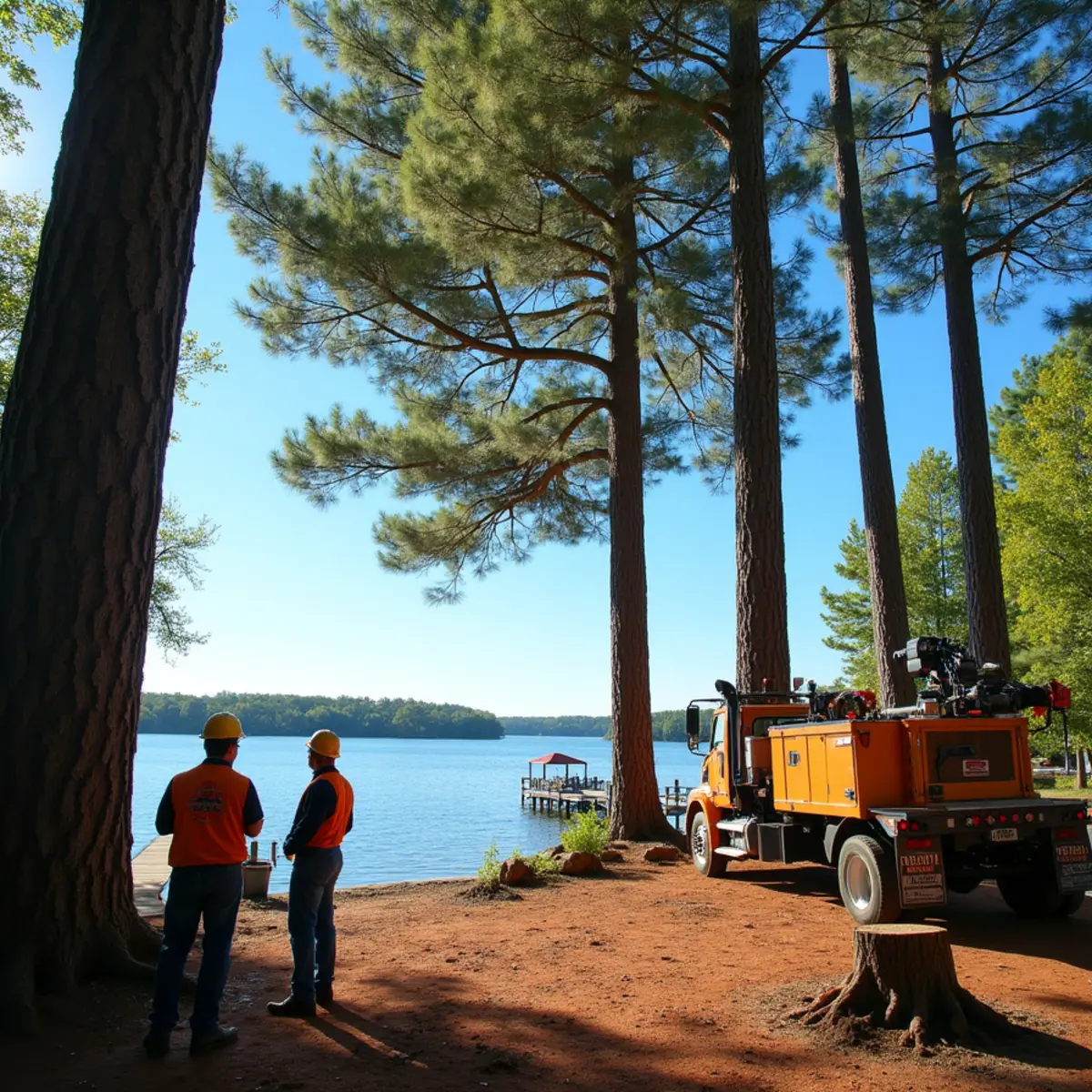
Lakefront property at Lake Norman comes with a view, a dock, and a set of rules that many new owners do not learn about until they try to remove a tree. The shoreline of Lake Norman is not like a typical backyard, because the lake is a managed reservoir and the land along the water is subject to shoreline management rules that govern vegetation, buffers, and what you can and cannot cut.
Removing the wrong tree, or clearing a buffer to open up a view, can bring penalties and remediation requirements that cost far more than the view was worth. The rules exist to protect water quality, prevent shoreline erosion into the Catawba River system, and preserve habitat, and they are taken seriously.
Here is what lakefront owners in Cornelius, Mooresville, and the other Lake Norman communities should understand before felling any tree near the water.
Key Takeaways
- Lake Norman is a managed Catawba River reservoir, so shoreline vegetation within regulated buffers is governed by rules beyond ordinary local tree ordinances.
- Owning the upland does not grant a free hand over the trees closest to the water, and assuming otherwise is the most common, costly lakefront mistake.
- Shoreline roots hold the bank against erosion and filter runoff, so unauthorized clearing can trigger fines plus mandatory replanting or bank stabilization.
- There is usually a documented pathway to remove a genuine hazard tree, while clearing healthy trees for a view generally is not permitted without approval.
Lake Norman is a managed reservoir, not open land
Lake Norman was created by damming the Catawba River, and the lake and a strip of land around it are managed under a shoreline management framework tied to the reservoir's operation. That means the vegetation along the shoreline, and especially within regulated buffer zones, is subject to rules that go beyond ordinary local tree ordinances.
Practically, this means a tree that looks like it is on your property may sit within a regulated zone where removal requires review or approval. Ownership of the upland does not automatically grant a free hand over the trees closest to the water. Assuming otherwise is the most common and costly mistake lakefront owners make.
Why shoreline buffers matter
The band of vegetation along a shoreline does critical work. Tree and plant roots hold the bank together and resist the erosion that would otherwise let soil slump into the lake, degrading water quality and filling in the shoreline. The buffer also filters runoff before it reaches the water and provides habitat.
Clearing that buffer to improve a view removes the very thing holding the bank in place, and eroded shorelines are difficult and expensive to repair. This is why regulators protect shoreline vegetation and why unauthorized clearing can trigger both fines and mandatory replanting or bank stabilization.
- Roots stabilize the bank and prevent erosion into the lake
- Vegetation filters runoff and protects water quality
- Buffers provide fish and wildlife habitat
- Unauthorized clearing can require costly remediation
Check before you cut
The right first step is always to determine what applies to your specific shoreline before any tree comes down. That means checking the shoreline management rules for the reservoir, understanding where the regulated zone falls relative to your property, and finding out whether the tree you want to remove requires review or a permit.
Different situations get different answers. A clearly dead or hazardous tree threatening your home is usually treatable, while removing healthy trees to open a view often is not permitted without approval. When in doubt, ask the managing authority and your local jurisdiction rather than guessing, because the cost of guessing wrong is high.
Hazardous and dead trees near the water
There is generally accommodation for genuine hazards. A dead, diseased, or dangerously leaning tree that threatens a home, a dock, or people is a different matter from view clearing, and there are typically pathways to address a true hazard even within a regulated buffer, sometimes with documentation of the hazard.
The key is doing it properly: confirming the tree qualifies as a hazard, following the required process, and often replacing what is removed. A professional who understands the shoreline rules can help document the hazard and keep the work compliant, so you address the danger without triggering an enforcement problem.
Document the hazard before it comes down, with dated photos of the dead crown, the lean, or the decay, and note what it threatens. That record protects you if anyone later questions why a shoreline tree was removed, and it distinguishes a legitimate safety removal from the kind of unauthorized view-clearing that draws enforcement. Keeping the paperwork is a small effort that heads off a large headache.
The risks of clearing for a view
The temptation on lakefront property is always the view, and the biggest enforcement cases at reservoirs across the Carolinas involve owners who cleared shoreline vegetation to see more water. Beyond the penalties, the practical result is often an eroding, destabilized bank and a requirement to replant, leaving the owner worse off than before.
If you want to improve a view, there are usually compliant ways to do it, selective, approved thinning or limbing rather than clearing, that respect the buffer. Working within the rules from the start is far cheaper than remediation after an enforcement action.
Getting compliant tree work at the lake
Shoreline tree work sits at the intersection of arboriculture and regulation, and the safest path is a crew that understands both. We work with Lake Norman homeowners in Cornelius, Mooresville, and the surrounding communities to handle hazardous trees near the water properly, document conditions, and keep the work within the applicable rules.
Before you cut anything near the shoreline, confirm the rules and get an assessment. Call (855) 615-0568 and we will help you address genuine hazards without running afoul of the buffer regulations. Always verify current requirements with the reservoir's managing authority and your local jurisdiction.
Steps to take before removing a shoreline tree
A little process up front prevents an expensive enforcement problem. Start by confirming exactly where your regulated shoreline zone falls relative to the tree, then check the reservoir's shoreline management rules and your local jurisdiction's requirements for that specific removal. If the tree is a genuine hazard, document its condition thoroughly before anything happens to it.
Working through it in a clear order keeps you both protected and compliant:
- Locate the regulated buffer boundary relative to the tree in question
- Confirm the reservoir's shoreline management rules and any review or permit needed
- Check town or county tree and land-disturbance requirements as well
- Photograph and document any dead, diseased, or leaning hazard before removal
- Plan any required replanting or bank stabilization into the job
Need help from a Charlotte tree crew?
Free estimates, licensed & insured, 24/7 emergency response.
Related Services & Areas
Frequently Asked Questions
Not necessarily. Lake Norman is a managed reservoir, and shoreline vegetation within regulated buffer zones is subject to rules beyond ordinary tree ordinances. Owning the upland does not give a free hand over trees closest to the water. Check the shoreline management rules before cutting.
Unauthorized clearing of a regulated shoreline buffer can bring penalties and mandatory remediation, such as replanting or bank stabilization. It also removes the roots holding the bank together, often causing erosion. Confirm what is allowed before removing shoreline vegetation.
Usually there is a pathway to address a genuine hazard, a dead, diseased, or dangerously leaning tree threatening a home or dock, even within a regulated buffer, often with documentation and sometimes replacement. Confirm the process before the work, and a knowledgeable crew can help document the hazard.
There are often compliant approaches, such as selective, approved thinning or limbing rather than clearing the buffer. Work within the shoreline rules from the start. It is far cheaper than facing an enforcement action and being required to replant an eroded, cleared bank.

Written & reviewed by
CLT Grapple and Stump Grinding Services
Locally owned and operated in Charlotte since 2018, our crews handle tree removal, grapple hauling, and stump grinding to ANSI A300 pruning and Z133 safety practices. Licensed & insured, 8+ years serving Mecklenburg County and North Carolina. Questions about your property? Call (855) 615-0568 or learn more about us.