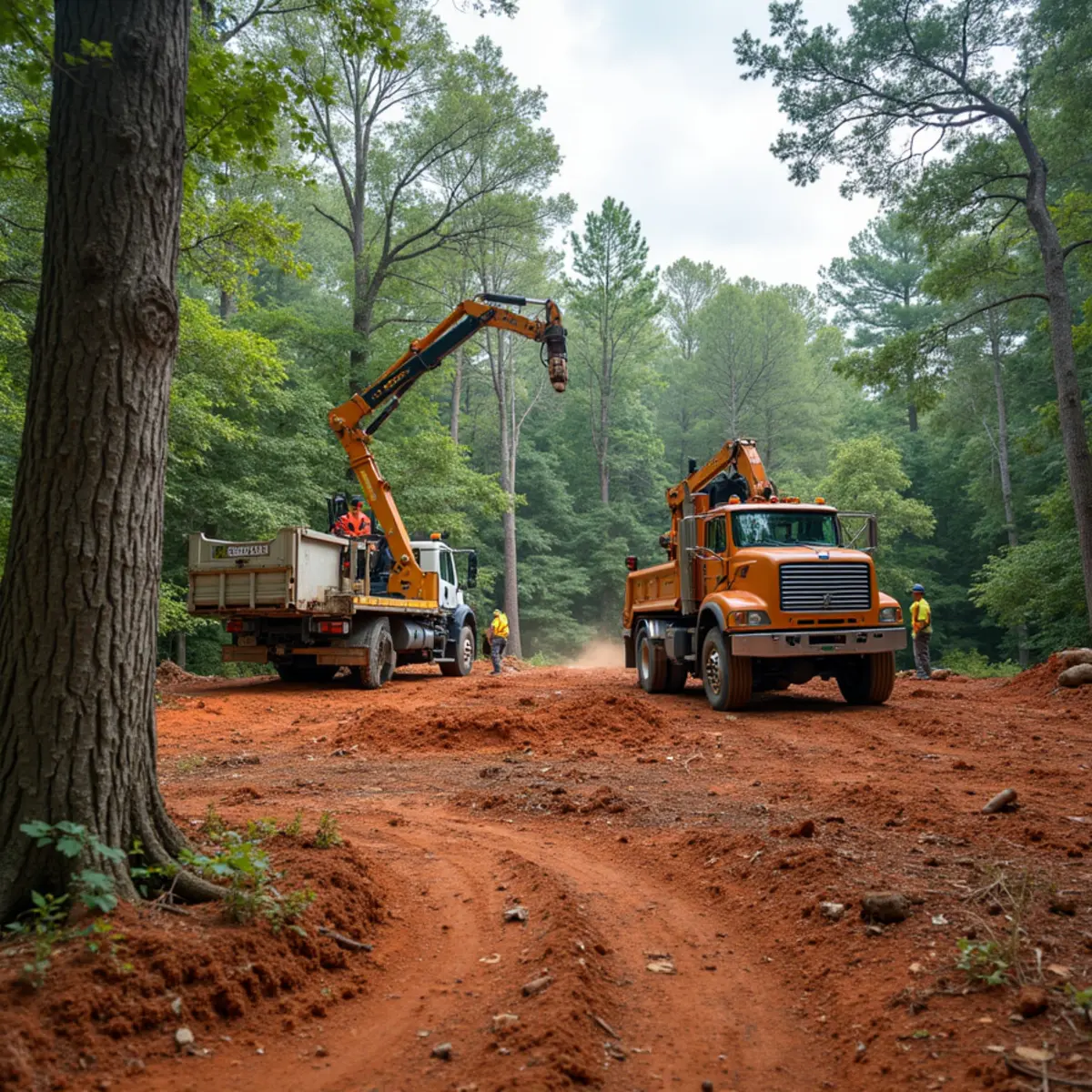
Clearing a lot for a new home is one of the first big decisions in a build, and getting it right saves headaches for the entire project. Done well, it gives builders clean access, protects the trees worth keeping, and keeps you on the right side of local ordinances. Done poorly, it triggers fines, drainage problems, and the loss of the mature trees that made the lot worth buying.
Mecklenburg and Union counties both regulate tree removal and land disturbance, and the rules differ between them and between municipalities within them. A homesite in Charlotte falls under the city's Unified Development Ordinance and tree ordinance, while a lot in Weddington or Waxhaw answers to Union County and town rules. Knowing which apply to your parcel is step one.
Here is a practical, sequenced approach to preparing a lot, so the clearing supports the build instead of complicating it.
Key Takeaways
- Before any tree comes down, confirm whether Charlotte's UDO or Union County and town rules apply; unpermitted clearing can bring stop-work orders and fines.
- Decide what to save before what to cut, and fence off keeper trees' root zones from equipment, grade changes, and compaction for the whole build.
- Clear from the interior of the building envelope outward toward the save areas, sectioning and rigging boundary trees rather than pushing them over.
- Excavate stumps fully under foundations and driveways, grind them in future lawn areas, and plan grapple hauling for the large debris volume upfront.
Check the rules before a single tree comes down
Before any clearing, confirm what your jurisdiction requires. Within Charlotte, the Unified Development Ordinance, including its tree provisions under Article 20, governs tree protection, save areas, and replacement on many parcels. Mecklenburg County and the towns each have land-disturbance and erosion-control requirements, and Union County jurisdictions like Weddington and Waxhaw have their own tree and grading rules.
Clearing without required permits, or removing protected trees, can bring stop-work orders and significant penalties. Verify setbacks, tree-save requirements, buffer zones near streams, and whether a land-disturbance permit is needed for the area you plan to grade. This is the cheapest insurance in the whole project.
- Confirm municipal vs. county jurisdiction for your parcel
- Identify protected trees and required tree-save areas
- Check stream and wetland buffers before clearing near water
- Secure land-disturbance and erosion-control permits as required
Decide what to keep before what to remove
The trees you save are as important as the ones you cut. Mature hardwoods add value, shade, and character that no landscaping can replicate for decades, and many ordinances require you to preserve a share of the canopy. Walk the lot with your builder and mark the specimens worth protecting, prioritizing healthy, well-formed trees away from the building footprint.
Saving trees is not just flagging them. Their root zones must be fenced off and protected from equipment traffic, grade changes, and soil compaction throughout construction, because damage done during the build often kills the tree years later. Plan the protection before the machines arrive.
Clear in the right order
Efficient clearing follows a logical sequence. Establish access first, then clear the building envelope and areas needed for grading and utilities, working from the interior outward toward the save areas so you do not damage protected trees while removing others.
Trees near the property lines and neighbors require care to fell or dismantle without crossing boundaries or hitting adjacent structures. On wooded Union County lots especially, the mix of large pines and hardwoods means some trees must be sectioned and rigged rather than simply pushed over.
Handle stumps and debris with the build in mind
How you deal with stumps depends on what goes over them. Anywhere under the foundation, driveway, or structural slab, stumps and major roots should be fully excavated so leftover wood does not rot and cause settling under the structure. In areas that will become lawn or landscaping, grinding is usually sufficient and far cheaper.
The volume of wood from clearing a wooded lot is enormous, and it has to go somewhere. Grapple trucks make short work of hauling trunks, limbs, and brush, and large trunks can sometimes be sold or repurposed as commercial wood rather than simply dumped. Planning debris handling up front keeps the site clean and the schedule on track.
Protect drainage and control erosion
Piedmont red clay and cleared land are a bad combination for erosion. Once the canopy and understory are gone, rain hits bare clay and runs off fast, carrying sediment into streets, storm drains, and streams, which is exactly what erosion-control ordinances exist to prevent. Silt fencing, inlet protection, and stabilized construction entrances are typically required and genuinely necessary.
Preserving vegetation in buffer areas and re-establishing ground cover promptly protects both your site and your neighbors, and keeps you compliant with county erosion rules. Skipping this step invites both fines and a muddy, unstable site.
Timing the clearing with the weather also helps. Clearing and grading during a dry stretch, then stabilizing before the next round of Piedmont thunderstorms, keeps sediment on your lot rather than in the street. Coordinating the tree work, the grading, and the erosion controls as one sequence, rather than as disconnected steps, is what separates a smooth build from one dogged by mud, complaints, and stop-work orders.
Bring in a professional clearing crew
Lot clearing combines tree work, heavy hauling, and regulatory compliance, and mistakes are expensive. A professional crew reads the site, works within the ordinances, protects the trees you are keeping, and removes the rest cleanly and efficiently, leaving a build-ready lot.
We handle lot and land clearing across Mecklenburg and Union counties, including Weddington, Waxhaw, and the surrounding towns, with grapple trucks and commercial hauling to move the volume a homesite generates. Call (855) 615-0568 to scope your lot.
What drives the cost of clearing a lot
Lot clearing is priced on the specifics, not a flat rate, so it helps to know what moves the number before you budget. The biggest factors are the size of the area to be cleared, how densely wooded it is, and the mix of trees, since large hardwoods and tall pines that must be sectioned and rigged cost more than light brush a machine can push over. Access, slope, and how far debris must travel to the truck all matter too.
Stump handling and disposal are their own line items, and the choice between grinding and full excavation swings the total. Salvage can offset it, because sound, large trunks are sometimes worth diverting as commercial wood rather than paying to dump them. Treat any figure as a non-guaranteed planning estimate until a crew walks the actual parcel.
Need help from a Charlotte tree crew?
Free estimates, licensed & insured, 24/7 emergency response.
Related Services & Areas
Frequently Asked Questions
Often yes. Charlotte's Unified Development Ordinance and county land-disturbance and erosion-control rules govern tree removal and grading, and requirements vary by parcel and jurisdiction. Confirm what applies before clearing, because unpermitted work can bring stop-work orders and fines.
It depends on location. Under the foundation, driveway, or structural slab, excavate stumps and major roots fully so leftover wood cannot rot and cause settling. In future lawn or landscape areas, grinding is usually enough and much cheaper.
Yes, and many ordinances require it, but flagging is not enough. Root zones must be fenced off and protected from equipment traffic, grade changes, and compaction for the whole build. Damage done during construction often kills a saved tree years later.
Grapple trucks and commercial hauling move the large volume a homesite generates. Trunks, limbs, and brush are lifted and hauled efficiently, and sound large logs can sometimes be repurposed as commercial wood rather than simply disposed of.

Written & reviewed by
CLT Grapple and Stump Grinding Services
Locally owned and operated in Charlotte since 2018, our crews handle tree removal, grapple hauling, and stump grinding to ANSI A300 pruning and Z133 safety practices. Licensed & insured, 8+ years serving Mecklenburg County and North Carolina. Questions about your property? Call (855) 615-0568 or learn more about us.