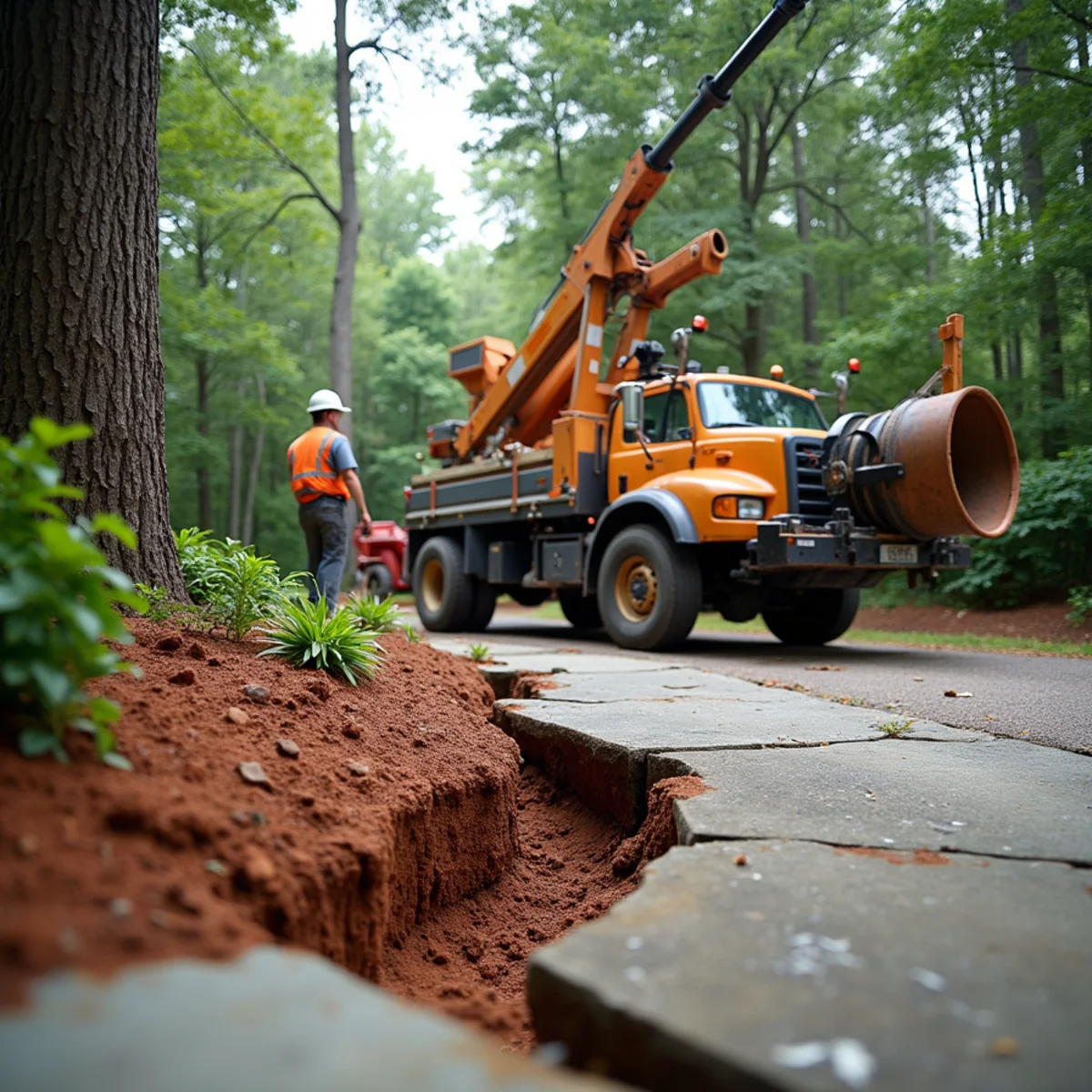
Homeowners often imagine tree roots as a mirror image of the canopy, plunging deep into the earth. The reality is almost the opposite, and understanding how roots actually grow, especially in North Carolina's dense clay, is the key to protecting your foundation, driveway, and walkways. Most root damage is preventable once you know how roots behave.
Piedmont red clay strongly shapes root growth. Because the dense subsoil is hard for roots to penetrate and often poorly drained, roots stay shallow and spread wide, concentrating in the top foot or two of soil where oxygen and water are available. That shallow, spreading habit is exactly what brings roots into conflict with hardscape and, in specific conditions, foundations.
Here is how tree roots really grow in NC clay, how they cause damage, and what you can do to keep your trees and your structures coexisting, for homeowners in Waxhaw, Union County, and greater Charlotte.
Key Takeaways
- Most tree roots grow within the top twelve to eighteen inches and spread two to three times the canopy width, so they are shallow and wide, not deep taproots.
- Dense, poorly drained Piedmont clay keeps roots near the surface, producing broad plate-like systems that lift hardscape and uproot in saturated soil.
- Roots rarely punch through sound foundations; in clay they more often dry expansive soil, causing uneven shrinkage and settling that cracks the foundation.
- Cutting large structural roots to save a driveway can destabilize and starve the tree, so have it assessed rather than cutting blindly.
Roots are shallow and wide, not deep
Contrary to the common image, the great majority of a tree's roots grow in the upper layers of soil, typically within the top twelve to eighteen inches, and spread outward well beyond the edge of the canopy, often to a distance of two to three times the branch spread. Roots go where the water and oxygen are, and in most soils that is near the surface.
In Piedmont clay this tendency is even more pronounced. The dense, compacted subsoil resists deep root penetration, and the poor drainage keeps roots up high seeking oxygen. So a large Charlotte hardwood may have a broad, shallow, plate-like root system rather than a deep taproot, which is why these trees uproot in saturated soil and why their surface roots interfere with driveways and walks.
How roots damage driveways and walkways
Surface roots are the usual culprit behind cracked and lifted hardscape. As a shallow root grows and thickens year after year, it exerts slow, enormous pressure on anything above it. A driveway, sidewalk, or patio slab sitting over an expanding root gets pushed up, cracked, and heaved, creating the buckled concrete and trip hazards familiar in older neighborhoods with mature trees.
This is a mechanical process, the root physically lifting the slab, and it is most common with large, surface-rooting trees planted close to hardscape. The damage develops gradually but relentlessly as the root grows, and once a slab is lifted, the fix usually involves both the concrete and the root.
The truth about roots and foundations
Foundation damage from roots is more nuanced and often misunderstood. Roots rarely punch through a sound foundation by brute force. The more common mechanism in clay soils is indirect: tree roots draw moisture out of the expansive clay near the foundation, and as that clay dries and shrinks, the soil under the foundation settles unevenly, which can crack the foundation.
Piedmont clay is moderately expansive, meaning it swells when wet and shrinks when dry, and a large tree's roots can accentuate that drying close to the house during droughts. Roots may also enter and enlarge cracks in an already-compromised or aging foundation, or infiltrate old, leaking drain and sewer lines. The point is that the interaction runs through the soil's moisture more than through direct root force.
- Roots dry expansive clay, causing uneven soil shrinkage and settling
- Roots exploit and enlarge existing foundation cracks
- Roots infiltrate old, leaking drain and sewer lines
- Direct root penetration of a sound foundation is uncommon
Prevention starts with the right tree in the right place
The best defense is planting appropriately. Large, aggressive, surface-rooting species should not be planted close to the house, driveway, or utilities; they need room to spread. Giving a big tree adequate distance from structures, and choosing smaller or less aggressive species for tight spots, prevents most root conflicts before they start.
For existing trees, root barriers installed between the tree and the structure can redirect root growth downward and away, and managing soil moisture around the foundation, consistent watering during droughts to limit extreme clay shrinkage, can reduce settling. These measures work best when planned thoughtfully rather than improvised after damage appears.
Why cutting roots is not a casual fix
When roots are already lifting a driveway, the temptation is to simply cut them, but this must be done carefully. Roots do two jobs, they feed the tree and they anchor it, and cutting large structural roots close to the trunk can both starve the tree and destabilize it, turning a hardscape problem into a whole-tree hazard that could fall in the next storm.
Whether a root can be safely cut depends on its size, its position, and its distance from the trunk. This is a judgment call best made by someone who understands the tradeoff between fixing the hardscape and preserving the tree's stability. Sometimes the right answer is removing and replacing the tree rather than repeatedly fighting its roots.
Get expert help with root and tree conflicts
If tree roots are threatening your foundation, cracking your driveway, or forcing a decision about a problem tree, a professional assessment weighs the options: root management, barriers, or removal and replacement with a better-suited tree. We also grind stumps and handle removals where a tree has simply outgrown its spot.
We help homeowners across Waxhaw, Union County, and greater Charlotte resolve root and tree conflicts without creating new hazards. Call (855) 615-0568 to discuss your situation before the damage worsens.
Warning signs roots are already causing trouble
Root conflicts develop slowly, so catching them early gives you cheaper options. Around hardscape, watch for concrete that has begun to lift, crack, or tilt along a line running back toward a nearby tree, and for pavers or walkway sections that have started to rock underfoot. Surface roots showing across the lawn near a driveway are a sign the system is shallow and spreading toward it.
Near the house, be alert to new cracks in a foundation, brick, or interior drywall that appear or widen during a dry spell, and to doors and windows that suddenly stick, which can signal soil movement. Recurring clogs or backups in older sewer and drain lines can point to root infiltration. No single sign proves a tree is the cause, but together, near a large tree, they justify a professional look before the damage compounds.
Need help from a Charlotte tree crew?
Free estimates, licensed & insured, 24/7 emergency response.
Related Services & Areas
Frequently Asked Questions
Shallower than most people think. The majority of roots grow within the top twelve to eighteen inches and spread wide, often two to three times the canopy width. Dense, poorly drained Piedmont clay keeps roots near the surface seeking oxygen, so deep taproots are uncommon here.
Usually indirectly. Rather than punching through sound concrete, roots draw moisture from expansive clay near the foundation, and as the clay dries and shrinks the soil settles unevenly, which can crack the foundation. Roots also exploit existing cracks and infiltrate old, leaking pipes.
Only with care. Large structural roots anchor and feed the tree, so cutting them near the trunk can destabilize the tree and make it prone to falling. Whether a root can be safely cut depends on its size and position, so have it assessed rather than cutting blindly.
Plant large, surface-rooting trees well away from driveways, walks, and the house, and choose smaller species for tight spots. Root barriers can redirect growth on existing trees, and managing soil moisture during droughts limits clay shrinkage near foundations. Plan these measures before damage appears.
Written & reviewed by
CLT Grapple and Stump Grinding Services
Locally owned and operated in Charlotte since 2018, our crews handle tree removal, grapple hauling, and stump grinding to ANSI A300 pruning and Z133 safety practices. Licensed & insured, 8+ years serving Mecklenburg County and North Carolina. Questions about your property? Call (855) 615-0568 or learn more about us.