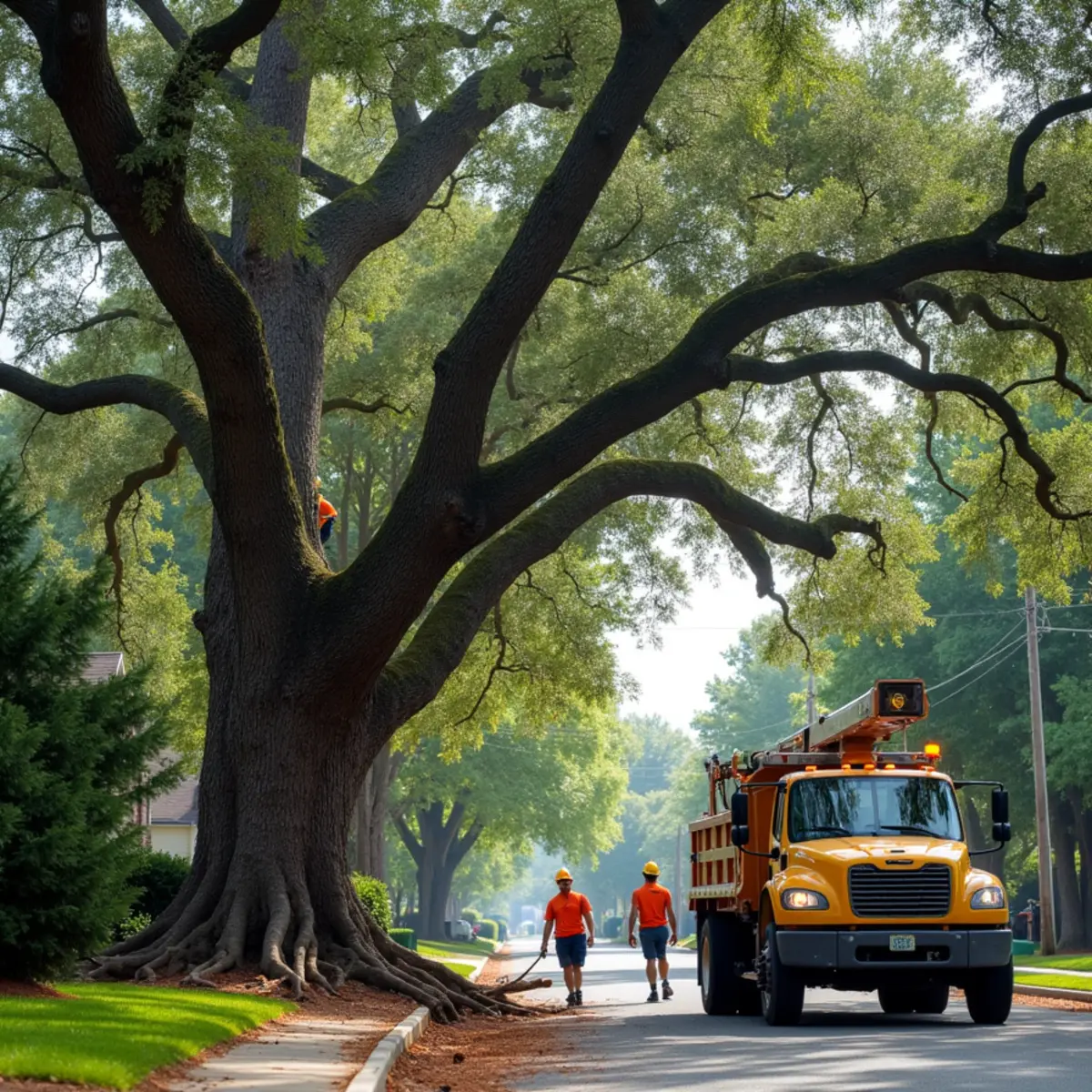
Charlotte's most beloved trees are also becoming its most worrisome. The willow oaks that arch over Myers Park, Dilworth, and Eastover, planted in great numbers in the early and mid twentieth century, define the city's character. They are also reaching the end of their useful lifespans at roughly the same time, and they are dropping large limbs onto cars, roofs, and sidewalks.
This is not random bad luck. It is the predictable result of a monoculture of trees that were planted together, grew together, and are now aging together in a challenging urban environment. Understanding why willow oaks fail as they age helps homeowners in these neighborhoods make smart, timely decisions rather than waiting for a limb to come through the roof.
Here is what is happening in Charlotte's canopy, the warning signs to watch, and what responsible tree care looks like for these aging giants.
Key Takeaways
- Charlotte's willow oaks were planted en masse in the same era and are aging together, driving today's wave of heavy limb failures onto cars, roofs, and sidewalks.
- Internal decay, weak included-bark unions, and long horizontal limbs combine with summer storms, and even calm-day summer limb drop, to bring big limbs down.
- Confined roots, compacted soil, and decades of trenching leave street willow oaks with less anchorage and vitality, accelerating their decline.
- Skilled dormant-season crown cleaning and reduction can buy safe years, but topping is never the answer and only makes future failures worse.
A canopy that is aging all at once
Willow oaks are fast-growing, graceful, and well suited to street planting, which is exactly why Charlotte planted so many. But fast growth comes with a tradeoff: the wood is not as dense or durable as slower-growing oaks, and the trees have a practical urban lifespan that many of Charlotte's specimens are now reaching or exceeding.
Because so many were planted in the same era, a large share of the city's willow oaks are hitting old age simultaneously. That is why longtime residents notice more limb failures now than a generation ago. It is a demographic wave passing through the urban forest.
Why old willow oaks shed heavy limbs
Several forces combine as these trees age. Internal decay hollows out limbs and trunks from within, often invisibly. Included bark, where two stems grew together with bark trapped between them, creates weak unions that split under load. And the sheer weight of long, horizontal limbs on a mature tree creates leverage that stressed or decayed wood cannot always hold.
Charlotte's summer thunderstorms deliver the final push. A saturated, wind-loaded limb with internal decay is a limb waiting to fail, and a single strong gust can send hundreds of pounds of wood to the ground. Sometimes limbs even fail on calm summer days, a phenomenon called summer limb drop that large oaks are prone to.
- Internal decay hollowing limbs and trunk from the inside
- Weak, included-bark unions that split under weight
- Long horizontal limbs with heavy leverage
- Storm wind and rain loading already-compromised wood
The urban stress multiplier
Street trees live hard lives. Their roots are confined by sidewalks, driveways, and compacted soil, often in a narrow strip between curb and walk. Decades of construction, utility trenching, and root-zone paving have quietly damaged the roots and lower trunks of many Charlotte willow oaks, reducing both their anchorage and their vitality.
A tree fighting for water and root space in compacted clay, with a canopy the size of a house, has fewer reserves to seal wounds and resist decay. Urban stress does not cause failure by itself, but it accelerates the decline that makes failure more likely.
Warning signs to watch for
You do not need to be an arborist to spot trouble. Walk your willow oak periodically and look up and around for the classic indicators of a limb or tree in decline. Any one of these justifies a professional look; several together are urgent.
- Dead limbs with no leaves, especially high in the canopy
- Cracks or splits where large limbs meet the trunk
- Mushrooms or shelf-like fungal conks on the trunk or roots
- Cavities, holes, or soft, crumbling wood
- Sawdust-like frass or fine holes indicating boring insects
- Recent limb drops, which often signal more to come
What responsible care looks like
Not every aging willow oak needs to come down. Skilled pruning removes deadwood and reduces the leverage of overextended limbs, buying safe years for a tree that is otherwise sound. A proper crown cleaning by trained climbers, never a topping job, keeps the canopy healthy and lowers the odds of failure.
When a tree is extensively decayed or structurally compromised over a target, removal is the honest answer, and delaying it only raises the risk and eventual cost. A good arborist tells you which category your tree falls into rather than defaulting to the most expensive option. Avoid anyone who suggests topping, which ruins the tree and makes future failures worse.
For the willow oaks worth keeping, a light structural pruning every few years, on the correct dormant-season timing, keeps deadwood from accumulating and catches weak unions before they split. Spread over the life of a mature tree, that routine care costs far less than a single emergency call after a limb has already come through a roof, and it lets these signature Charlotte trees grace the streetscape for as long as they safely can.
When to bring in a professional
If your willow oak has dropped a limb, shows dead wood over a house or driveway, or displays any of the warning signs above, have it assessed. These trees are large enough that failures cause real damage and real danger, and the assessment itself is inexpensive insurance.
We inspect, prune, and, when necessary, remove aging willow oaks throughout Charlotte's historic neighborhoods, with the rigging skill these big trees demand. Call (855) 615-0568 for an evaluation before the next storm makes the decision for you.
What to plant when a willow oak has to come down
When an aging willow oak finally has to go, the smartest move is to avoid repeating the monoculture that created the problem. Charlotte's canopy is fragile precisely because so many identical, same-age trees are declining together, so diversifying with different species spreads the risk and protects the shade a neighborhood will have decades from now.
Good replacements for Piedmont yards include longer-lived, sturdier oaks and other hardwoods adapted to red clay, chosen to fit the space and set well back from foundations, driveways, and the Duke Energy service drop. Match the mature size of the tree to the spot so it is not fighting the same crowding and root confinement that stressed the original.
- Diversify species rather than replanting another willow oak
- Choose longer-lived hardwoods adapted to Piedmont red clay
- Site the new tree well clear of foundations, drives, and power lines
- Match the tree's mature size to the space actually available
Need help from a Charlotte tree crew?
Free estimates, licensed & insured, 24/7 emergency response.
Related Services & Areas
Frequently Asked Questions
They were planted in large numbers in the same era and are reaching old age together. Willow oaks grow fast but have less durable wood and a finite urban lifespan, so the city's canopy is passing through an aging wave that shows up as more limb failures.
Often, yes. Removing deadwood and reducing overextended limbs lowers the leverage and failure risk of a tree that is otherwise structurally sound, buying safe years. Only trees with extensive internal decay or compromised structure over a target truly need removal.
It is the sudden failure of a large limb on a calm, hot summer day, without wind or storm. Big oaks including willow oaks are prone to it, likely tied to heat, internal water stress, and limb weight. It is one reason deadwood and overextended limbs should be pruned proactively.
No. Topping is one of the most damaging things you can do to a tree. It triggers weakly attached regrowth, invites decay, and makes future limb failures more likely, not less. Proper crown cleaning and reduction by trained climbers is the safe approach.
Written & reviewed by
CLT Grapple and Stump Grinding Services
Locally owned and operated in Charlotte since 2018, our crews handle tree removal, grapple hauling, and stump grinding to ANSI A300 pruning and Z133 safety practices. Licensed & insured, 8+ years serving Mecklenburg County and North Carolina. Questions about your property? Call (855) 615-0568 or learn more about us.